
National Maritime Museum
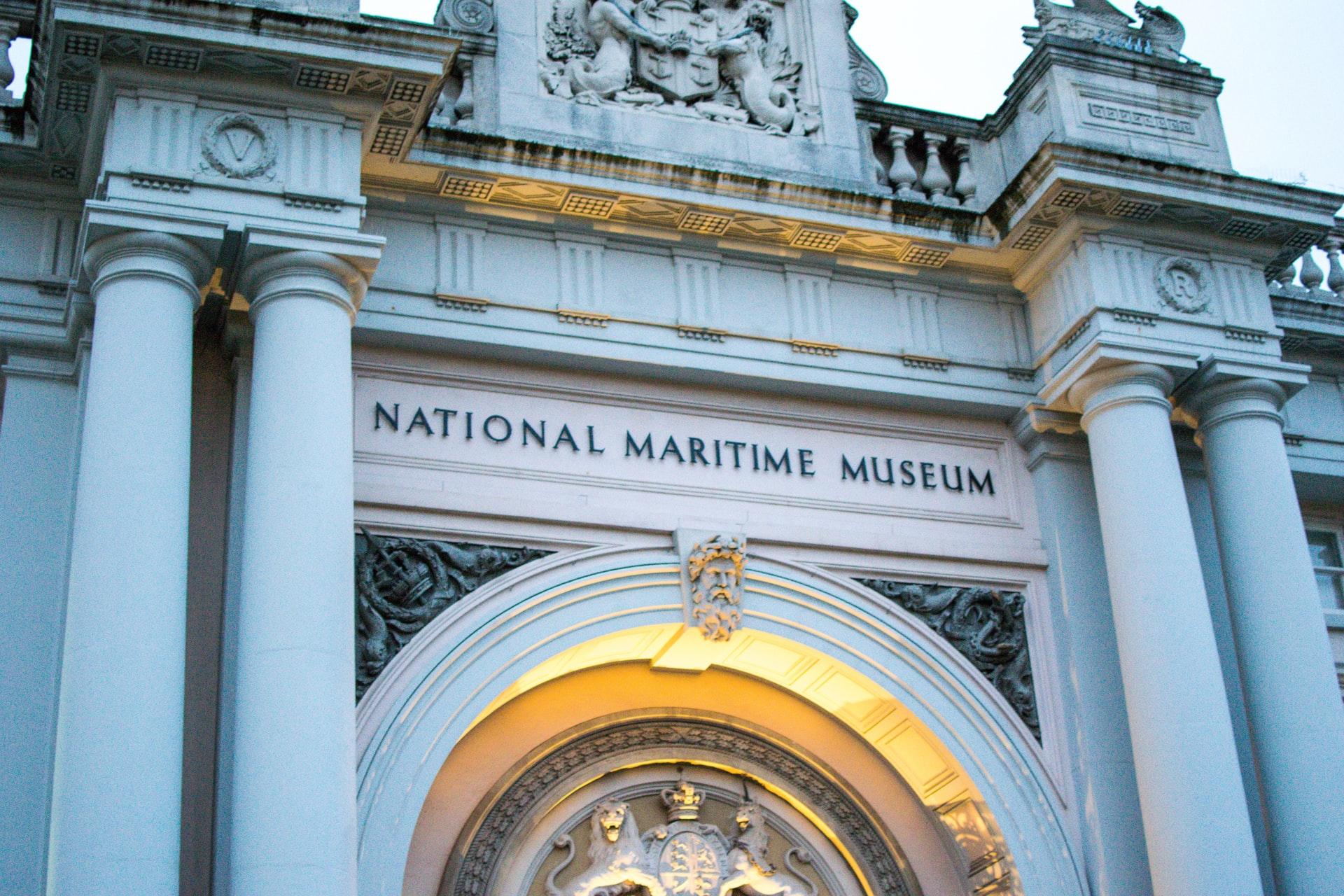
The National Maritime Museum was inaugurated on 27 April 1937 by King Jorge VI. It is the largest museum in the world dedicated to the navy. It turns out that the National Maritime Museum tells the story of the naval force that dominated the seas and oceans for centuries. To know the history of the British Navy is to travel through an empire that began to expand in the 16th century, during the reign of Elizabeth I, and lasted until the beginning of the 21st century.
It is a museum that is always up to date. Even those who already know it can be surprised by the news that is added to it.
Video
4 wings and various galleries
The National Maritime Museum is divided into 4 wings: north, south, east and west. As soon as you enter, following the right hand side, you start the tour with the west wing. Strictly speaking, it doesn’t matter where you start, but the certainty that you haven’t missed the best parts. Before going up to the first floor, for example, you can’t miss entering the room dedicated to the painting “The Battle of Trafalgar” by Turner.
Turner and the battle of Trafalgar
It is the largest painting by one of the most important English artists. On the other hand, the painting represents one of the most important moments of the battles fought by the English against Napoleon Bonaparte. At the time the painting was painted, it was controversial because, in it, Turner highlights the high human cost of this victory, commissioned by one of the great English heroes: Commander Nelson.
The Worlds of the Atlantic Ocean
The main galleries of the Maritime Museum are in the wing called Nelson’s Navy Gallery. It is an area entirely dedicated to historical events related to navigation in the Atlantic Ocean.
One of the most important aspects concerns the records relating to the slave trade. The Americas, the Caribbean and Africa stand out as territories economically exploited by the English. Numerous maps explain how the world trade that made England the dominant power in the world for 3 centuries worked.
The Stuarts and the Tudors
The justification for two families to have a gallery entirely dedicated to them is simple: together they have dominated the throne of England for over 100 years. It was during the reign of Queen Elizabeth I, a representative of the Tudor dynasty, that England began the expansion of the empire across the oceans. There are many interactive things to learn about the period and a special highlight is the victory of the English naval force against the powerful Spanish armada of King Felipe II. Until then, the Spanish armada was called “invincible”.
The great hero of the National Maritime Museum
Commander Nelson is a hero and a legend in England’s maritime history. In the heart of London, Trafalgar Square, a pedestal visible from afar, holds a statue in his honour. And at the Maritime Museum, Nelson’s Naval Hall tells the story that made him a myth. The fact that he died at the command of his fleet against Napoleon’s troops made him a legend.
The few hours he lived after being mortally wounded were enough to let him know that England had been victorious. His last words expressed a sense of accomplishment. In the gallery, the clothes he was wearing when he was wounded are on display.
Forgotten Fighters – World War II at Sea
The Forgotten Combatants is the space dedicated to the battles fought in the seas during the First World War. As well as organising the events in chronological order, it is possible to see how the navy evolved in terms of equipment. Prototypes and models of ships and submarines bring the visitor closer to the world we live in.
The conquest of the poles
The gallery dedicated to the North and South Poles is the final demonstration of how far the British Navy has travelled around the world. Here, in addition to learning about the details of this achievement, visitors are invited to reflect on the occupation of the hubs and their economic exploitation.
Things from the sea
After passing through a room dedicated to children, the last part of the visit inside the National Maritime Museum in London took place at the Sea Things Gallery. A show of objects related to the daily life of a sailor, whatever his rank.
How to get to the museum
Park Row, Greenwich Peninsula, London SE10 9NF, United Kingdom
https://www.rmg.co.uk/national-maritime-museum
https://g.page/NationalMaritimeMuseumGreenwich?share


