Camden Town
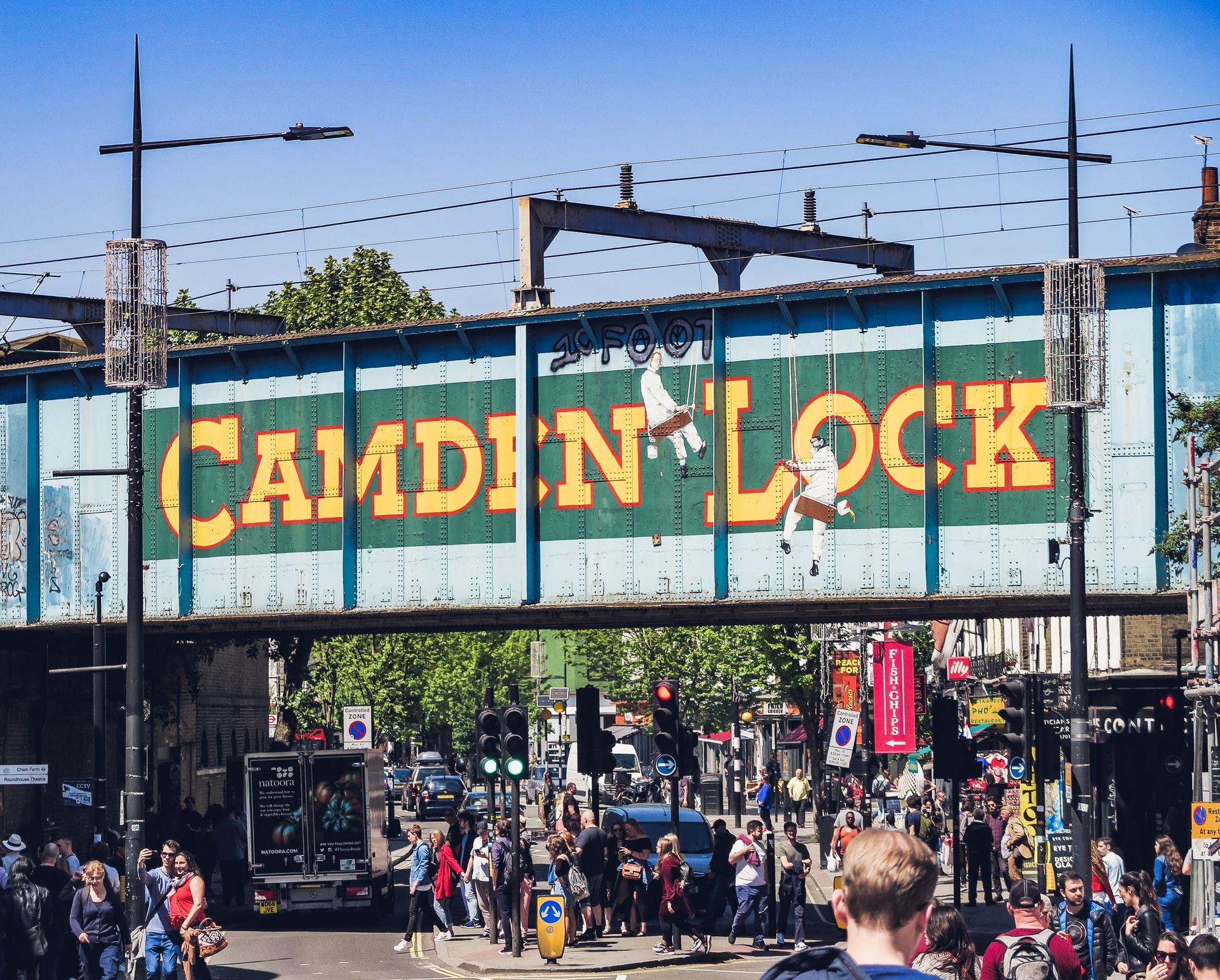
Camden Town is an area of north central London that became famous for its craft market, which opened in the early 1970s, and especially for the audience it attracted.
In the early 1980s, the area was a mecca for punks. Today, there are still punks and goths.
Much has changed in those 40 years and today Camden, no longer the centre of the city’s alternative scene, attracts many tourists (it is said to be one of the city’s most visited attractions) and Londoners from different tribes.
In addition to the markets, Camden Town has hundreds of designer studios and workshops, shops, cafes, restaurants and bars selling a wide range of goods, from alternative, vintage and local designer clothing and accessories to antiques, furniture, general knick-knacks, jewellery, souvenirs, crafts and tattoo and piercing shops.
In fact, there were originally 4 distinct areas of shops and stalls along Camden High Street and Chalk Farm Road, each with its own characteristics.
Camden Market
On the right hand side of the street, this market is currently the largest market in London and consists of two markets: the Stables Market and Camden Lock Market. You will find shops, workshops, bars, cafes, restaurants and food stalls from all over the world. It even has a gin distillery.
The Stables Market includes the old stables and veterinary hospital which are part of a removal company. The horses were used to pull the carts that distributed goods around the city. It is a building of historic importance and a listed building. You will walk through a labyrinth of alleyways with shops and stalls, including under the railway arches.
In this area you will find the statue of Amy Winehouse, a Camden resident and local.
Camden Lock Market is where the original Camden Town Market was located on the banks of the Regents Canal. There is a covered area (Market Hall) and an open courtyard, the West Yard. This is where the stalls of jewellery, decorative items, paintings, prints and many book and CD/record stands are concentrated.
It is interesting to note that large retailers are not allowed to operate in Camden Market. The aim is to bring together small entrepreneurs and artists.
Ideal for: alternative fashion, antiques, furniture and food.
Opening hours: open daily from 10am to 6pm. Closed on 25/12.
Video
Camden Market (Buck Street)
South of the canal, Chalk Farm Road is now called Camden High Street, and has been home to this market for over 30 years.
The market operates in 52 containers on 3 floors and has a sustainable and modern footprint. Buck Street Market is very close to Camden Town tube station.
How to get to Camden Town
The nearest tube station is Camden Town on the Northern (black) line, but on Sundays I suggest you get off at the next station on the same line, Chalk Farm, which is much emptier and also very close to the markets.
In recent years Camden Market has ceased to be a weekend market and is also in full operation throughout the week. The only day of the year you won’t find anything open in Camden Town is 25/12.
The advantage of visiting Camden during the week is that you don’t have to deal with the crowds, as it is said that over 100,000 people come to the area at the weekend.
Another important tip is that, as with any busy and crowded place in the world, you should keep an eye on your valuables. If you can, leave your passport in the hotel safe, don’t take too much money with you and keep an eye on your camera.
https://goo.gl/maps/vCGTF4UqeAeKC7s66